
Let’s be honest—writing employee evaluations is nobody’s favorite task. You sit down with the best intentions, but the words just don’t come. How do you capture a whole year of work in a few paragraphs?
The numbers tell the story. Managers spend up to 17 hours per employee on traditional evaluation processes. That’s time you could spend coaching, developing talent, or actually managing. Here’s the kicker: while 74% of managers agree these assessments are critical for team success, 42% admit the process feels like a burden.
Enter the ai performance review generator—not as a replacement for your judgment, but as your writing partner. These tools have moved from futuristic concept to practical workplace solution.
Think of an automated performance feedback generator as having a skilled assistant who handles the heavy lifting. You provide the specifics about your team member’s work, and the technology crafts professional, thoughtful evaluations.
This article shows you exactly how these tools work and why they matter. You’ll discover how to implement them effectively while keeping the human touch that makes feedback meaningful. Ready to reclaim those hours?
1. Understanding the AI Performance Review Generator Revolution
The workplace is experiencing a quiet revolution where AI-powered tools are replacing outdated, time-consuming review processes. Companies are moving away from scattered notes and generic templates toward intelligent systems that actually understand performance patterns. This shift is changing how managers approach employee evaluations and how HR departments structure their feedback cycles.
What Is an AI Performance Review Generator?
An AI performance review generator is a software platform that uses artificial intelligence review writing to create, structure, and refine employee assessments. These tools act as smart assistants that analyze performance data from multiple sources.
They pull insights from goals, feedback sessions, one-on-one meetings, and historical review data. The system then helps managers craft reviews that are specific, fair, and actionable rather than vague or generic.
The Evolution from Manual to Automated Performance Feedback
Traditional reviews relied on manual note-taking, Word documents, and cookie-cutter templates that rarely captured individual contributions. Managers spent hours trying to remember key moments from throughout the year.
Modern automated systems integrate directly with HR platforms and learn from organizational patterns. Tools like Lattice AI Agent can quickly summarize past feedback, conversations, goals, and review history in minutes instead of hours.
The technology adapts to different roles, creating specialized assessments for developers, marketers, project managers, and executives with relevant competencies for each position.
Why Organizations Are Adopting Artificial Intelligence Review Writing
Several factors are driving the rapid adoption of machine learning performance appraisal software across industries. Remote work has made continuous feedback harder to track, and growing teams make manual reviews completely unsustainable.
Managers are overwhelmed with data from Slack messages, project management tools, email threads, and meeting notes. They need help synthesizing all this information into coherent assessments.
Organizations are also discovering that artificial intelligence review writing can reduce unconscious bias and improve consistency across departments. The table below shows the key differences between traditional and AI-powered approaches:
| Review Aspect | Manual Process | AI-Powered System | Time Savings |
|---|---|---|---|
| Data Collection | Manually searching emails and notes | Automated aggregation from integrated platforms | 4-6 hours per review |
| Review Drafting | Starting from blank document | AI-generated initial draft with key examples | 2-3 hours per review |
| Consistency | Varies by manager style and memory | Standardized criteria with personalized details | Improved fairness metrics |
| Bias Detection | Difficult to identify or measure | Built-in algorithms flag potential bias | Enhanced objectivity |
These tools augment human decision-making rather than replacing the human element entirely. The best systems combine AI efficiency with manager judgment to create meaningful performance conversations.
2. How Automated Performance Feedback Generators Work
The magic of automated performance reviews isn’t actually magic—it’s a carefully orchestrated system of algorithms, data analysis, and language generation. These systems pull together information from dozens of sources to create reviews that feel personal and relevant. Let’s break down exactly how an ai performance evaluation tool transforms raw data into polished feedback.
The Technology Behind Machine Learning Performance Appraisal Software
At the core of these platforms sits machine learning algorithms trained on thousands of real performance reviews. These algorithms learn patterns about what makes feedback effective, constructive, and actionable. They understand the difference between vague statements like “needs improvement” and specific guidance like “would benefit from leading two client presentations this quarter.”
The system doesn’t just copy and paste from templates. It analyzes relationships between different data points to generate context-aware suggestions. Think of it as having a really smart writing assistant who’s read every performance review in your company’s history and knows exactly what resonates.
Data Collection and Analysis Processes
Before any review gets written, the ai HR analytics tool needs information to work with. Modern systems connect to multiple data sources across your organization. They gather performance metrics, project completions, peer feedback, and goal achievements automatically.
| Data Source | Information Collected | Review Application |
|---|---|---|
| HRIS Platforms | Attendance, tenure, role changes, training completions | Tracks reliability and professional development efforts |
| Project Management Tools | Task completion rates, deadlines met, collaboration metrics | Measures productivity and teamwork effectiveness |
| Goal Tracking Software | Objective progress, milestone achievements, target results | Evaluates goal attainment and strategic alignment |
| Peer Feedback Systems | 360-degree reviews, recognition badges, collaboration ratings | Provides well-rounded perspective on interpersonal skills |
This multi-source approach ensures reviews reflect actual performance rather than manager memory. The AI analyzes patterns across all this data to identify strengths, growth areas, and specific examples worth highlighting.
Natural Language Processing for Review Generation
Here’s where things get interesting. Natural language processing allows the system to write like a human, not a robot. The technology understands context, adjusts tone based on the situation, and varies language to avoid repetitive phrasing.
When generating constructive feedback, the AI knows to balance criticism with encouragement. It suggests specific examples drawn from the performance data rather than generic statements. The system can even adapt writing style to match your company culture—whether that’s formal and corporate or casual and startup-friendly.
Real-Time Performance Tracking and Insights
Modern systems don’t just activate during annual review season. They continuously monitor performance metrics throughout the year. This ongoing tracking means managers aren’t scrambling to remember what happened six months ago when review time arrives.
The ai HR analytics tool flags trends as they emerge, identifies skill gaps before they become problems, and visualizes team strengths in real-time dashboards. When it’s time to write reviews, the system has already documented progress, compiled relevant examples, and summarized key achievements. This transforms review writing from a dreaded memory exercise into a straightforward documentation process.
3. Top Benefits of Using an AI Performance Evaluation Tool
Organizations implementing smart performance assessment tools discover benefits that extend far beyond simple automation. These systems transform performance management from a dreaded annual task into a strategic advantage. The payoff shows up in everything from manager productivity to employee satisfaction scores.
Dramatic Time Savings for HR Teams and Managers
Traditional performance reviews eat up massive amounts of time. Managers spend up to 17 hours per employee on reviews using old-school methods. For a manager with eight direct reports, that’s 136 hours of writing, revising, and formatting.
An automated employee performance review system slashes this time by 60-70%. That same manager now spends around 40-50 hours instead of 136. Those recovered hours go toward actual coaching conversations and employee development.
The problem gets worse when you consider that 42% of managers find the review process a burden. Another 49% struggle to remember and review a year’s worth of feedback. AI solves both issues by tracking performance continuously and generating draft reviews in minutes.
Enhanced Accuracy and Consistency Across Reviews
Human fatigue creates uneven review quality. The first review a manager writes receives full attention and thoughtful wording. By the tenth review, quality drops as exhaustion sets in.
A smart performance assessment tool maintains the same level of detail for every employee. Each review gets specific examples, varied language, and comprehensive coverage of performance areas. No employee receives a rushed or generic assessment.
Instead of writing “great team player” ten times, AI generates unique phrasing for each person. This keeps praise fresh and makes employees feel genuinely valued rather than processed through a template.
Reducing Bias and Promoting Fairness
Unconscious bias creeps into manual reviews through subtle language choices. Research shows that similar performance gets described differently based on demographic factors.
AI detection tools flag potentially biased language before reviews go to employees. They identify inconsistencies in how managers describe comparable achievements across different team members. This creates more equitable assessments across the organization.
One important note: not all AI is created equal. Studies like those from Textio found that generic AI like ChatGPT can actually introduce gender bias into reviews. Purpose-built HR AI tools include bias detection features that general language models lack.
Data-Driven Insights for Employee Development
Modern performance technology does more than generate text. It analyzes patterns across reviews to identify skill gaps and development opportunities.
These systems track performance trends over time, helping managers spot improvement areas before they become problems. The analytics transform reviews from backward-looking judgments into forward-looking growth plans.
HR teams can aggregate data across departments to create targeted training programs. Instead of guessing what skills need development, they work from concrete performance data.
Improved Employee Engagement and Satisfaction
When reviews are specific, fair, and actionable, employees respond positively. They feel seen and valued rather than reduced to a number on a rating scale.
The data backs this up: 74% of managers consider performance reviews critical for getting the most from their teams. An automated employee performance review system helps deliver on that potential by ensuring every review meets quality standards.
Employees receive clear development paths tied to their career goals. They understand exactly what success looks like and how to get there. This clarity drives engagement and reduces turnover among top performers.
4. Must-Have Features in Smart Performance Assessment Tools
Not all AI performance review tools are created equal—the features you choose can make or break your implementation success. When shopping for an ai performance review generator, you need to separate genuine value-adds from flashy extras that sound impressive but don’t deliver results. The right feature set transforms your review process from a dreaded annual chore into a strategic advantage.
Let’s break down the four essential capabilities that separate powerful platforms from disappointing ones.
Customizable Templates and Review Frameworks
One-size-fits-all approaches fail spectacularly in performance management. A software engineer’s evaluation looks nothing like a sales representative’s assessment, and your ai performance review generator needs to reflect these differences.
The best tools offer role-specific templates with relevant competencies, skills, and performance metrics already built in. But customization goes deeper than job titles.
You should be able to modify competency frameworks to match your organization’s values and culture. Adjust rating scales from the standard five-point system to whatever works for your team. Add custom fields for company-specific requirements. Change the language and tone to match your communication style.
Multi-Language and Localization Capabilities
Global organizations face a challenge that goes beyond simple translation. Cultural norms around feedback vary dramatically across regions, and your automated performance feedback generator needs to handle these nuances intelligently.
The most advanced platforms support 30+ languages with true localization—similar to how content generation platforms like UnlimitedVisitors.io create localized content variants for different regions. The same principle applies to performance reviews across global teams.
A performance review for an employee in Tokyo should respect Japanese business communication norms, which tend toward indirect feedback and group harmony. Meanwhile, a review for a team member in Austin can be more direct and individualistic. Smart tools adjust these cultural elements automatically while maintaining consistent evaluation standards.
Integration with HRIS and Talent Management Platforms
Here’s where many ai performance review generator implementations fail—poor integration capabilities. If your tool can’t pull data from existing systems, you’re still doing manual data entry, which defeats the entire purpose.
Essential integrations include:
- HRIS platforms for employee data, reporting structures, and role information
- Project management tools to track completed work and contributions
- Goal-tracking software to measure progress against objectives
- 360-degree feedback systems to incorporate peer and subordinate input
- Learning management platforms to connect development activities with performance outcomes
Seamless data flow transforms an automated performance feedback generator from a nice-to-have into a genuine time-saver. Look for platforms with pre-built connectors to popular enterprise systems and robust APIs for custom integrations.
Advanced Analytics and Reporting Dashboards
The real power of AI-driven reviews emerges when you aggregate data across your organization. Advanced analytics help HR leaders spot patterns that would be impossible to detect manually.
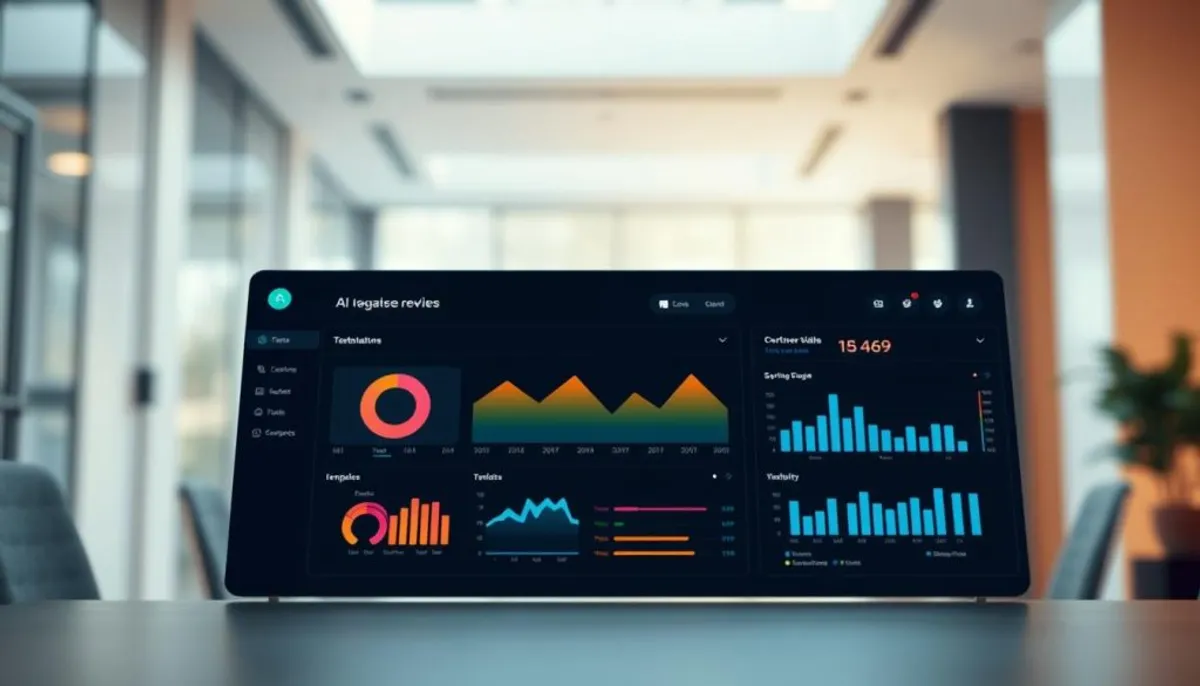
Top-tier platforms provide visualization tools that track performance trends over time, identify high performers and employees needing support, reveal skill gaps across teams or departments, and highlight areas where development investments deliver the strongest returns.
These insights transform performance management from an administrative checkbox into a strategic workforce planning tool. You can make data-driven decisions about promotions, succession planning, and resource allocation instead of relying on gut feelings and incomplete information.
5. Implementing Your Automated Employee Performance Review System
Getting your hands on cutting-edge technology is simple—making it work seamlessly in your organization is the real challenge. A thoughtful implementation strategy makes the difference between a transformative tool and expensive software that collects digital dust. Before implementing AI tools, organizations should develop comprehensive AI policies with guardrails to guide appropriate use.
This roadmap will help you roll out your new system without creating chaos or resistance along the way.
Is Your Organization Actually Ready?
Before committing to an ai performance evaluation tool, you need an honest assessment of where you stand. Ask yourself these critical questions: Is your performance data currently organized and accessible, or scattered across disconnected spreadsheets and email threads?
Do you have executive buy-in and adequate budget allocated? Consider whether your management team embraces new approaches or clings to established processes. A simple readiness scorecard can help gauge whether now is the right time or if you need to lay some groundwork first.
What Does Good Performance Look Like Here?
Your ai HR analytics tool can only be as effective as the criteria you feed it. Start by creating clear competency frameworks that define role-specific expectations aligned with company values and strategic goals.
Translate abstract concepts like “demonstrates leadership” into concrete, observable behaviors the system can recognize and assess. Establish measurable success metrics that reflect what truly matters in your workplace culture. This foundation determines everything that follows.
Making the System Reflect Your Culture
Configuration is where you customize the ai performance evaluation tool to match your unique environment. Adjust the tone—are you a formal corporate setting or a casual startup? Set review cycles, configure approval workflows, and establish privacy settings that respect employee data.
Language preferences and department-specific adaptations ensure the ai HR analytics tool speaks your organization’s dialect. This customization phase transforms generic software into something that feels like it was built specifically for your team.
Getting Everyone on Board
HR has the opportunity to play a lead role in the rollout and utilization of AI—in the drive of efficiency, creativity, and risk mitigation. Successful adoption requires getting managers comfortable through hands-on training sessions that help everyone get up to speed on how to use AI responsibly.
Address concerns transparently and create advocates who can champion the tool with their peers. Establish feedback loops so the implementation can be adjusted based on real user experience. Regular checks to monitor how things are going help catch issues early.
Remember: this isn’t just an IT project—it’s a cultural shift that requires thoughtful communication and ongoing support throughout the transition period.
6. Best Practices for AI HR Analytics Tools
The difference between mediocre and exceptional AI-powered reviews comes down to how you use the technology. Having an artificial intelligence review writing system in place doesn’t guarantee success. What matters is applying smart practices that maximize value while avoiding common pitfalls.
Think of these best practices as your roadmap to getting real results from your investment.
Balancing Automation with Human Judgment
AI should be your assistant, not your replacement. Using it to generate generic, one-size-fits-all feedback won’t help your team. A performance review is a chance for real talk about how someone is doing, and that requires human insight.
The best approach treats machine learning performance appraisal software as your starting point, not your endpoint. Let the AI draft initial content, then add personal observations and specific examples that only you can provide.
The quality of AI output depends on the quality of input. For the best results, develop detailed prompts and keep an ongoing bulleted list of successes and challenges for each team member.
Maintaining Transparency in AI-Generated Reviews
Should you tell employees that AI was used in their review? Research shows that when employees discover AI was used without disclosure, trust decreases and performance can actually decline.
Be upfront about AI assistance while emphasizing that human managers make the final decisions. This transparency builds trust rather than eroding it.
Regular System Calibration and Quality Checks
Just like any system, AI tools need periodic review to ensure they’re performing well. Set up a quarterly audit process where HR reviews a sample of AI-generated content for quality, bias, and accuracy.
Use those findings to refine prompts, adjust settings, or retrain users. This keeps your system aligned with company values and performance standards.
Encouraging Two-Way Feedback and Dialogue
AI-generated reviews should never be one-way documents delivered from on high. Use them as conversation starters that provide structure for meaningful dialogue.
Employees should be able to respond, ask questions, and collaborate with managers on development plans. This turns artificial intelligence review writing into a tool for engagement rather than just documentation.
7. Overcoming Common Implementation Challenges
Let’s face it: implementing AI-powered performance reviews comes with its share of hurdles that need strategic navigation. Every organization deploying a smart performance assessment tool will encounter obstacles ranging from employee concerns to technical limitations. The good news? Most of these challenges have proven solutions that can smooth your transition considerably.
Addressing Employee Skepticism and Resistance
The people problem hits first and hardest. Employees often worry that AI means their manager doesn’t care enough to write their review personally.
Here’s the fascinating twist: a 2021 study revealed that AI-generated feedback actually improves employee performance more than human feedback—but only when employees don’t know it came from AI. Once disclosed, job performance decreases and trust in the feedback quality drops significantly.
The solution isn’t hiding the truth. Instead, focus on transparent communication about how the automated performance feedback generator enhances rather than replaces human judgment. Involve employees in the design process and clearly demonstrate the benefits they’ll receive: more detailed feedback, reduced bias, and clearer development plans.
Ensuring Data Privacy and Compliance
Privacy concerns represent your biggest legal risk. Never enter employee names or personally identifiable information into generic AI tools like ChatGPT or Google Gemini—these platforms won’t necessarily protect data under your company’s regulations.
Purpose-built HR platforms come with proper GDPR, SOC 2, and industry-standard compliance. Always verify that your chosen automated performance feedback generator includes data encryption, access controls, and complies with employment laws in your jurisdiction.
Work with legal counsel to audit your AI usage. Understand exactly where employee data gets stored and who can access it.
Managing System Limitations and Special Cases
AI isn’t perfect, and recognizing its boundaries prevents disappointment. The technology struggles with highly nuanced situations requiring deep context, brand-new roles without historical data, or complex interpersonal issues.
Build processes for manual override when AI suggestions don’t fit. Your managers need the authority and training to modify or completely rewrite AI-generated content when circumstances demand it.
Avoiding Over-Reliance on Automated Assessments
The biggest trap? Letting the AI do everything. Managers who simply accept generated content without thoughtful review are missing the point entirely and potentially damaging relationships with their direct reports.
These tools should enhance human judgment, not replace it. The smart performance assessment tool provides a foundation, but managers must add personal observations, specific examples, and genuine engagement to create meaningful reviews.
| Challenge Type | Common Symptoms | Recommended Solution | Success Metric |
|---|---|---|---|
| Employee Resistance | Low adoption rates, negative feedback surveys | Transparent communication, involvement in design process | 85%+ employee acceptance within 6 months |
| Privacy Concerns | Legal questions, data breach risks | Purpose-built HR platforms with compliance certifications | Zero data incidents, full audit compliance |
| System Limitations | Inaccurate suggestions for complex cases | Manual override processes, manager training | 95%+ manager satisfaction with flexibility |
| Over-Automation | Generic reviews lacking personal touch | Review quality audits, manager coaching | Employee engagement scores maintained or improved |
8. Scaling Performance Review Content with AI Technology
The real power of an ai performance review generator shows up when you need to create thousands of high-quality reviews without sacrificing personalization. Traditional methods simply can’t keep up when you’re dealing with enterprise-level demands. Every employee deserves thoughtful, detailed feedback—but creating that manually for hundreds or thousands of people is nearly impossible.
AI technology solves this by leveling the playing field across your entire organization. Some managers are naturally gifted writers who craft detailed, insightful reviews. Others struggle and end up producing generic feedback that doesn’t help anyone grow. With automation, everyone gets the same quality of documentation regardless of their manager’s writing abilities.
Generating Personalized Reviews at Enterprise Scale
Creating personalized assessments for every employee becomes achievable when you leverage AI. The technology adapts content based on role, seniority, department, and individual performance data. A review for a junior developer looks completely different from one for a senior sales executive—and that’s exactly how it should be.
Different positions require different evaluation criteria. AI generates assessments designed specifically for specialists, managers, and executive-level staff without requiring manual customization for each one.
Creating Location and Department-Specific Assessments
Geographic and departmental differences matter more than most organizations realize. A review for a sales team in Chicago might emphasize individual achievement and competitive metrics. The same role in Singapore might focus more on collaboration and team harmony because of cultural expectations.
An automated employee performance review system adapts tone, emphasis, and competencies based on location-specific requirements. It understands that different regions have different communication norms and adjusts accordingly. This localization extends to compliance with regional labor laws and documentation requirements too.
Applying AI Content Generation Principles from Platforms Like UnlimitedVisitors.io
The principles behind scaling performance reviews mirror how platforms like UnlimitedVisitors.io generate localized, entity-rich content for SEO at massive scale. Just as UnlimitedVisitors.io creates thousands of city-, region-, and country-specific articles optimized for search engines and LLMs, an ai performance review generator produces department-, role-, and location-specific assessments.

Consider the parallels: UnlimitedVisitors.io uncovers keyword opportunities and clusters long-tail queries. Performance review AI identifies competencies and clusters performance indicators in remarkably similar ways. Both applications let users customize tone, length, target audience, and brand voice before generating output.
UnlimitedVisitors.io includes metadata, schema.org markup, and structured formatting in every piece of content. Performance documentation should follow the same approach—clear frameworks, consistent formatting, and structured data that makes analysis possible. The platform’s support for 30+ languages directly translates to what global performance management needs.
| Content Generation Feature | UnlimitedVisitors.io Application | Performance Review Application |
|---|---|---|
| Localization | City, region, country-specific content variants | Department, location, role-specific assessments |
| Discovery Optimization | SEO keywords and SERP research | Competency mapping and performance indicators |
| Customization | Tone, length, brand voice integration | Company culture, review style, criteria weighting |
| Structured Output | Metadata, schema markup, formatting | Framework compliance, consistent structure, analyzable data |
Both systems leverage multiple AI models and conduct automated research to create outputs optimized for their respective discovery mechanisms. It’s not just automation—it’s applying proven AI content generation principles to HR documentation.
Structuring Entity-Rich, Context-Aware Performance Documentation
Generic accomplishment lists don’t cut it anymore. Modern automated employee performance review systems create entity-rich documentation that connects employee performance to specific projects, business outcomes, team impacts, and organizational goals. This structured approach transforms reviews from subjective narratives into analyzable data assets.
Context-aware documentation references actual work products, measurable results, and concrete examples. This creates a performance history that can be referenced, analyzed, and built upon over time—turning individual reviews into a comprehensive talent intelligence system.
9. Integration Strategies for Seamless Workflows
An ai performance evaluation tool works best when it connects seamlessly with the systems your team already uses every day. If your review platform can’t pull data from your existing software, you’ll waste time on manual entry instead of saving it. The right integration approach makes your performance management system feel like a natural part of your workflow, not an extra task.
Connecting with Existing HR Technology Stacks
Your HR ecosystem probably includes several platforms already. Most organizations use an HRIS or HCM system like Workday, BambooHR, or ADP for employee records. You might also have goal-tracking tools like Lattice or 15Five, project management platforms such as Asana or Jira, and engagement survey software.
Each connection serves a specific purpose. Your HRIS integration keeps employee information, job titles, and reporting structures updated automatically. Goal-tracking platform connections pull in objective completion data so reviews reflect actual achievements. When artificial intelligence review writing tools access project management systems, they can reference real work outputs instead of relying on manager memory.
Automating Data Flow Between Systems
Technical integration happens through APIs, webhooks, or pre-built connectors. Many vendors offer native integrations with popular platforms. For systems without direct connections, middleware tools like Zapier or Workato can bridge the gap.
Ask potential vendors about their integration options before committing. Check whether data syncs in real-time or in scheduled batches. Find out what data governance controls exist to protect sensitive employee information. The setup process should be straightforward, not a months-long IT project.
Building End-to-End Performance Management Workflows
The best implementations turn performance management into a continuous process rather than an annual event. Imagine goals set in January automatically feeding into quarterly check-ins. Peer feedback collected through integrated tools flows directly into AI analysis without manual transfers.
When project completions in your PM tool generate automatic achievement records, managers save hours of documentation time. The final review document created through artificial intelligence review writing gets routed through your approval workflow and stored in employee records automatically. This end-to-end approach eliminates copying, pasting, and duplicate data entry completely.
10. Real-World Applications Across Industries
Performance assessment technology adapts to the specific challenges each business faces daily. The way a healthcare system evaluates nurses differs completely from how a tech startup reviews developers. Understanding these practical applications helps organizations see where AI-driven reviews fit their unique situation.
Corporate and Enterprise Use Cases
Large corporations benefit tremendously from standardized evaluation processes. A financial services company with 5,000 employees recently implemented an automated employee performance review system that ensures regulatory compliance across all branches. The technology maintains consistent documentation standards whether employees work in New York, London, or Singapore.
Professional services firms use these tools to balance client-facing performance with internal development goals. Consulting companies track billable hours alongside skill growth, creating comprehensive assessments that support both business objectives and career advancement.
Performance Reviews for Remote and Hybrid Teams
Distributed teams actually gain more from AI-powered reviews than traditional office workers. An automated employee performance review system analyzes contributions across multiple digital platforms without the “office visibility” bias that plagues conventional evaluations.
Remote tech companies synthesize data from GitHub commits, Slack conversations, project management tools, and video meetings. This approach captures work that managers might otherwise miss, creating fairer assessments for employees who contribute asynchronously or across different time zones.
Adapting to Different Company Sizes and Structures
A startup with 15 employees needs different features than an enterprise with 15,000. Smaller organizations prioritize speed, simplicity, and cost-effectiveness when selecting a smart performance assessment tool. They want quick setup without complex configuration.
Large enterprises require sophisticated permissions, multiple approval workflows, and advanced analytics dashboards. They need tools that handle organizational complexity while maintaining data security across departments and regions.
Industry-Specific Requirements and Customizations
Healthcare organizations customize their smart performance assessment tool to track clinical competencies and patient outcome metrics. Retail companies focus on customer satisfaction scores and seasonal performance variations that reflect their business cycles.
Manufacturing environments prioritize safety records and production efficiency. Creative agencies evaluate portfolio quality and client feedback. Tech companies assess code quality, sprint performance, and technical skill development through specialized metrics that matter to their industry.
11. The Future of Machine Learning in Performance Appraisals
Tomorrow’s performance management systems won’t just document the past—they’ll forecast the future and actively shape employee development. The current generation of machine learning performance appraisal software is impressive, but we’re only scratching the surface of what’s possible. The next wave of innovations will transform how organizations identify talent, prevent problems, and accelerate growth.
Think of it like upgrading from a rearview mirror to a GPS navigation system. Instead of just seeing where you’ve been, you’ll know where you’re heading and get alerts about obstacles ahead.
Predictive Analytics and Performance Forecasting
Future systems will analyze patterns to predict outcomes before they happen. Advanced machine learning performance appraisal software will identify employees at risk of disengagement months in advance. It will spot high-potential talent before their managers even notice.
Imagine getting an alert that says: “Based on current trends, this employee will likely excel in technical skills but struggle with the leadership competencies needed for promotion. Recommend these three development experiences now to prepare them.” That’s the power of predictive analytics in action.
Continuous Feedback and Real-Time Coaching
The annual review will become obsolete as systems shift to continuous performance management. Future platforms will provide real-time coaching suggestions the moment performance issues emerge. Managers will receive prompts to recognize achievements immediately rather than waiting for quarterly check-ins.
This approach aligns with research showing that ongoing feedback drives better results than annual evaluations. Employees will always know where they stand because feedback becomes part of daily work rather than a formal event.
Integration with Learning Management and Career Development
Tomorrow’s systems will create closed-loop development cycles. The AI won’t just identify skill gaps—it will automatically recommend specific courses and create personalized learning paths. It will match employees with mentors who have exactly the skills they need to develop.
The cycle becomes seamless:
- Assess current performance and identify development needs
- Recommend targeted learning experiences and resources
- Track progress as employees complete development activities
- Measure whether training actually closes the identified gaps
- Reassess and adjust recommendations continuously
Enhanced Personalization Through Advanced AI Models
Next-generation ai HR analytics tool platforms will understand individual employee contexts with unprecedented depth. Just as advanced content platforms now optimize for both traditional search methods and LLM discovery approaches, performance systems will adapt to each person’s unique situation.
These systems will consider career aspirations, learning styles, communication preferences, and personal circumstances. They’ll adjust feedback language based on how each employee responds best. They’ll recommend development activities that match individual motivation patterns. They’ll even suggest optimal timing for check-ins based on workload and stress levels.
The result? Performance management that feels truly personalized rather than one-size-fits-all.
Transform Your Performance Review Process Today
Performance reviews matter. Research shows 74% of managers agree these evaluations are critical for getting the most out of their teams. But here’s the problem: traditional review methods consume up to 17 hours per employee. That’s an overwhelming burden that leaves 42% of managers feeling stressed and stretched too thin.
An ai performance review generator changes this equation completely. You get faster turnaround times without sacrificing quality. The technology handles the heavy lifting while you focus on meaningful conversations about growth and development.
The benefits stack up quickly. Time savings give managers hours back in their weeks. Consistency improves across all reviews. Bias gets reduced through standardized evaluation criteria. Documentation becomes thorough and defensible. Employees receive more detailed, actionable feedback that actually helps them improve.
Success requires the right approach. Keep humans in the loop for final decisions. Be transparent about using AI assistance. Run regular quality audits. Protect employee data with strong privacy measures. Invest in proper training and change management.
Start small if you’re new to this technology. Assess your current process and identify the biggest pain points. Research vendors that address your specific needs. Launch a pilot program before rolling out company-wide.
AI in HR isn’t going anywhere. Organizations that master an ai performance evaluation tool now will gain real advantages in attracting, retaining, and developing talent. The technology keeps evolving, and early adopters will lead their industries in people management excellence.