
Welcome to an intriguing exploration of geo examples. These samples reveal Earth’s physical traits and the complex human-environment interactions. By exploring geological instances, we can discover the intricacies of our landscapes. This unlocks a deeper understanding of how cultures influence them. The goal here is to highlight the importance of geographical exploration. We emphasize how studying spatial patterns and developing mapping tools can address issues like resource management and environmental challenges.
In navigating the geography domain, you’ll see the interconnectedness of various fields. Disciplines such as geology, environmental science, and economics come together. This integrated perspective helps us tackle today’s crucial questions through the lens of geo examples.
Introduction to Geography
Geography delves into the complex relationships between people and their surroundings. It emphasizes the need to explore how cultural, political, and natural aspects influence each other. By studying mountains, rivers, and deserts, we gain insights into cultural influences and political landscapes. Geography’s essence lies not just in identifying locations but in understanding their significance and interactions.
Exploring spatial questions unlocks understanding of phenomenon distribution and arrangement. This exploration offers a window into human behavior, environmental consequences, and how resources are allocated. The use of effective exploration and mapping, key in earth sciences, is vital. These methods enhance our understanding, helping address issues like urban growth and pollution. It promotes informed planning and decision-making.
The Importance of Geo Examples in Earth Science
Geo examples hold immense value in earth science, shedding light on complex topics like plate tectonics and climate dynamics. Through examining these samples, students gain a clearer picture of how our planet’s geological and atmospheric systems interact. Such practical illustrations make abstract concepts more understandable.
The influence of human actions on natural habitats becomes clearer through geo examples. Analyzing urban environments, for instance, unveils the effects of pollution and expansion on our surroundings. These cases demonstrate the tight link between ecosystems and human activities, enriching our insight into environmental transformations.
Correlating earth science samples with current ecological phenomena aids in forecasting potential environmental issues. Utilizing geo examples in education broadens comprehension and cultivates analytical thinking. This approach is fundamental for both learners and experts in grasping earth science’s deeper meanings.
| Geo Examples | Earth Science Samples | Geographical Significance |
|---|---|---|
| Plate Tectonics | Seismic Activity | Understanding Earthquakes |
| Climate Zones | Weather Patterns | Environmental Impact Analysis |
| Biodiversity Hotspots | Ecosystem Studies | Conservation Efforts |
Physical Geography: Understanding Natural Landscapes
Physical geography delves into earth’s landscapes, studying how nature’s processes mold our surroundings. It covers a range of geological features, like mountains and rivers, showcasing our planet’s intricacies. By understanding these natural phenomena, we learn about their interactions with climate, vegetation, and human activities.
The field comprises various branches, each with a unique focus. Geomorphology looks at landforms and their formation processes. Climatology examines climate patterns and their impact on the earth. Biogeography explores the distribution of living organisms across different terrains, showing how geography affects biodiversity. Hydrology studies water systems and their influence on landscapes, underlining water’s critical role.
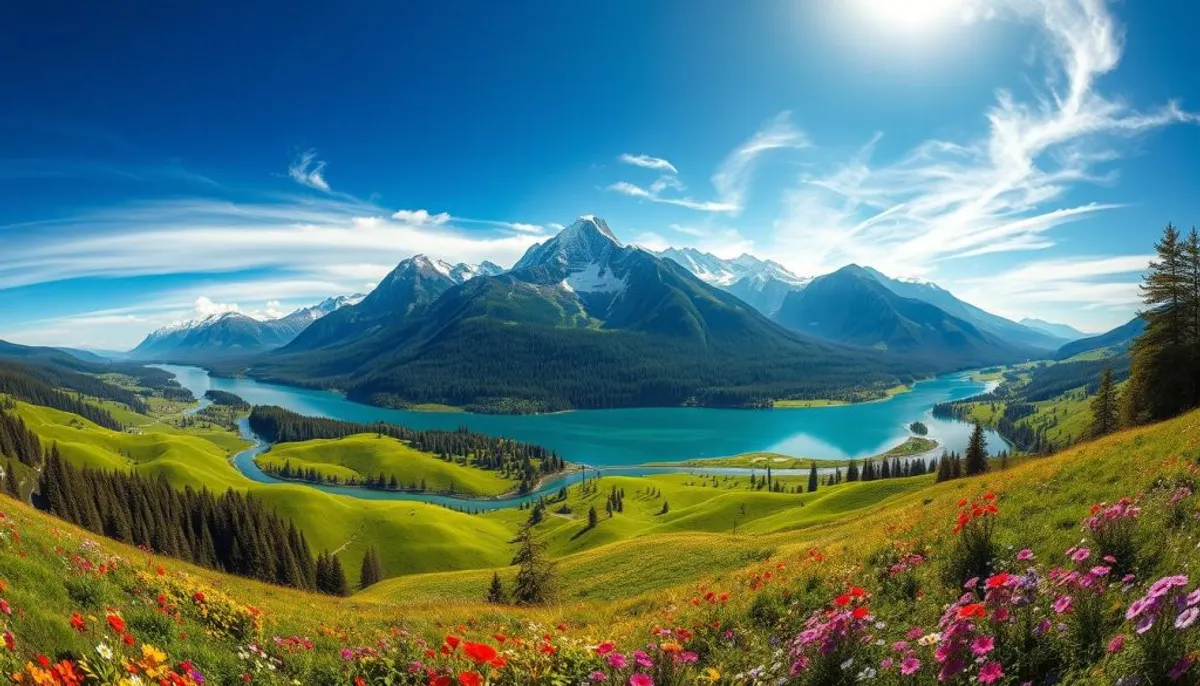
Amid global climate change challenges, physical geography’s role becomes crucial in resource management and fostering sustainable methods. It boosts our understanding of geological features and natural processes, essential for reducing environmental harm. This knowledge aids scientific research and elevates public consciousness about the importance of safeguarding our natural world during rapid transformations.
Human Geography: The Interaction between Culture and Environment
Human geography delves into how humans alter landscapes and organize space. It looks at how our economic actions and the earth’s geography interact. The effects of city growth on social structures and cultural interactions are crucial here.
How Economic Activities Shape Geographic Space
Economic geography examines the impact of agriculture, industry, and trade on landscapes. Urban expansion and infrastructure progress lead to changed land uses. This alters regional landscapes and cultures. For instance, a growing tech hub can transform local economies and enhance cultural diversity.
The Role of Urbanization in Geographic Examples
Urbanization plays a vital role, influencing demographic shifts and how land is used. Cities become centers for economic and cultural exchange, blending various populations and cultures. Migration, policy, and economic factors drive urban development. They create centers for innovation and cultural richness.
| Economic Activity | Impact on Geography | Cultural Implications |
|---|---|---|
| Agriculture | Land transformation for farming | Rural traditions and community structures |
| Industry | Urban sprawl and infrastructure development | Shifts in cultural demographics and job markets |
| Trade | Connection of regions through commerce | Cultural exchange and globalization |
Geological Examples: Landforms and Processes
This section explores the intricate landforms carved by tectonic actions. It shows how tectonic forces mold the Earth. By examining these natural formations, we grasp the workings of Earth’s dynamic systems.
Exploration of Tectonic Activity in the Pacific Ring of Fire
The Pacific Ring of Fire exemplifies tectonic activity’s power. It’s a region filled with geological features from tectonic plate movements. Earthquakes and volcanic eruptions highlight its geological dynamism. It’s where one can observe both the destruction and creation through tectonic forces.
The Impact of Erosion on Landforms
Erosion constantly alters landscapes, powered by wind, water, and ice. These forces gradually sculpt rocks, shift sediments, and transform the terrain. Examples like valleys and coastal cliffs showcase erosion’s role in shaping environments. They illuminate the complex interaction between ecosystems and geological formations.
Geo Examples: Iconic Locations and Their Significance
Diving into iconic geo examples unveils a profound comprehension of the planet. It shines a light on locations pivotal in molding our geological and ecological insights. The Grand Canyon and the Great Barrier Reef embody these landmarks wonderfully, with each narrating its own saga through its creation and ecological roles.
The Grand Canyon: A Geological Wonder
The Grand Canyon, crafted by the Colorado River’s force, stands as a testament to geological time. It showcases rock layers that span eons, offering a glimpse into erosion, sediment build-up, and past climates. These layers act like a historical record, detailing the region’s weather changes and geological phenomena. As a renowned geo example, it attracts worldwide visitors keen to marvel at its vast beauty and geological importance.
Great Barrier Reef: Ecosystems and Biodiversity
The Great Barrier Reef is the planet’s most extensive coral reef system, exhibiting unparalleled biodiversity. Its waters harbor species found nowhere else, making it a crucial node for ecological equilibrium. The reef’s welfare is vital, facing threats from global warming and human interference. Protecting this magnificent site is imperative to preserve its splendor and ecological roles for the coming generations.
| Landmark | Significance | Major Features |
|---|---|---|
| Grand Canyon | Geological history and erosion processes | Layered rock formations, Colorado River |
| Great Barrier Reef | Biodiversity and conservation importance | Coral habitats, marine species diversity |
Geographic Illustrations: Latitude and Longitude Explained
Latitude and longitude create a framework for pinpointing locations worldwide. They transform the Earth into a grid, much like graph paper. This grid system simplifies navigation and improves our grasp of mapping technologies. It ensures we can locate any spot on the globe with precision.
How Grid Mapping Works
The division of the Earth into latitude and longitude degrees forms the core of grid mapping. Latitude denotes a place’s distance north or south from the Equator. Its range is from 0° to 90°. Longitude, on the other hand, shows how far east or west a spot is from the Prime Meridian. This line connects the North and South Poles. Each latitude or longitude degree is subdivided into minutes and seconds for exact detail. This precise system is crucial for navigation, creating maps, and geo-related studies.
Understanding the Earth’s Coordinate System
The coordinate system of the Earth is vital for various tech uses, including in Geographic Information Systems (GIS). Thanks to latitude and longitude, GIS can monitor movements, lay out routes, or study geographical info across regions. Knowing about geographic coordinates grows more vital for experts, adventurers, and common folk. This knowledge boosts our capability to make informed decisions regarding location, resources, and the use of land around the world.
Case Studies: Regional Geographical Studies Around the World
Geographic case studies shed light on how culture and environment intertwine. They not only appreciate diversity but also show how geography shapes human lives. Africa and the Arctic Circle serve as key examples, with their distinct geographic and cultural features.
Africa’s Diverse Cultural Landscapes
Africa’s richness in culture is evident across its varied landscapes. It boasts deserts and jungles that influence its myriad societies. The continent’s cultural diversity is a testament to how different environments foster unique ways of life. These factors help bond communities and encourage biodiversity.
Multiple case studies from Africa highlight its cultural richness. They explore music, art, and social structures, unveiling the continent’s geographical and social diversity.
The Arctic Circle: Climate and Geography
The Arctic Circle is a prime example of how geography meets climate. Global warming is changing this landscape, melting ice and altering ecosystems. Its geography affects weather, biodiversity, and indigenous ways of life.
Case studies from the Arctic show the effects of climate change on life’s balance. They emphasize the need to protect its vulnerable environment, illustrating the broader implications of global warming.
Geospatial Instances: Using Technology to Understand Geography
Today, technology radically influences our grasp of geography and spatial relationships. Through advancements in geospatial technology, we can analyze and visualize vast geographic data. This analysis unlocks insights affecting numerous sectors. Tools like Geographic Information Systems (GIS) are constantly evolving, extending their reach into urban planning, environmental management, and agriculture.
The Role of GIS in Modern Geography
GIS stands as the cornerstone for analyzing spatial data. It streamlines the collection, management, and examination of geospatial data. With GIS, experts can map patterns, pinpoint trends, and forecast scenarios. This aids in making choices that affect both communities and ecosystems. Utilizing GIS for evaluating land changes or planning infrastructure helps visualize complex information, linking geographic theory with practical application.
Remote Sensing Techniques and Their Applications
Remote sensing revolutionizes our method of collecting and interpreting Earth’s surface data. Researchers employ satellite imagery and aerial photos to track environmental shifts and assess resources. This method uncovers critical trends, like urban expansion or forest loss, which aren’t instantly noticeable. Combining remote sensing with geospatial tech improves decision-making, fostering sustainable management and smart policy-making.

Conclusion
In concluding our journey through global geo examples, it’s evident that geography’s role is fundamental. Not just academically, but in our daily experiences. Through various examples, we’ve seen how landscapes interact with human activities. These interactions ultimately mold our surroundings and our cultural essence.
The critical nature of geography in tackling global issues such as climate change and expanding urban areas cannot be ignored. It bridges cultural and ecological knowledge, guiding us towards sustainable solutions. As geographical studies evolve, they promise new insights and methods. These will undoubtedly deepen our comprehension of our world.
The advent of platforms like UnlimitedVisitors.io marks a pivotal moment for geographic research. By improving local content visibility, it enhances community involvement in geography. This increases public engagement in our planet’s story, as it unfolds.