
Local search strategies in 2025 will fuse traditional SEO with innovative technologies and tangible signals. These can be envisaged as three main pillars. They include visibility, provided by classic SEO techniques, clarity through geo-specific content that engages AI and voice queries, and relevance steered by local search indicators such as Google Business Profile and citations.
Beginning this journey necessitates a mastery of SEO fundamentals: swift-loading pages, explicit titles, and informative metadata define the starting point. Subsequently, one must incorporate geo-specific elements. This includes the development of conversational FAQ sections, the application of structured data, and the creation of content tailored for voice assistants and large language models. The culmination involves honing local SEO tactics that ensure proximate customers not only discover but prefer your establishment.
The significance of an integrated SEO approach is pronounced for both physical and service-oriented businesses. Targeting geolocation accurately alongside maintaining consistent directory listings elevates “near me” search performance. This strategy also minimizes ranking fluctuations and synchronizes content with the authentic search intentions. Employing tools such as Google Search Console, Semrush, and BrightLocal, the objective remains unaltered: to remain always accessible, trusted, and preferred.
Understanding Local Search and Why It Matters for Your Business
Local search has evolved rapidly, heavily influenced by advancements in AI. Businesses that integrate local SEO with geographic strategies enhance their visibility. Prioritizing proximity, prominence, and relevance ensures inclusion in traditional lists, AI-generated answers, and map displays.
What local search looks like in 2025
By 2025, search technologies become predominantly AI-driven. The fusion of traditional organic outcomes, map pack entries, and AI summaries characterizes results. Enhanced interfaces demand immediate, accurate responses from digital aids. Consequently, optimizing your Google Business Profile and location pages for both humans and AI algorithms is essential.
How visibility, clarity, and relevance work together
Visibility pertains to organic and map-based ranking positions. Clarity involves providing clear, AI-recognizable information via schema and consistent NAP details. Relevance connects content with user queries about services, operational hours, or reviews. Harmonizing these aspects transforms searches into physical visits.
Why “near me”, map packs, and voice queries drive local traffic
The prominence of “near me” searches and voice queries has risen on mobile devices and smart speakers. This trend benefits locales showing proximity cues and optimized local pages. Map packs continue to offer significant opportunities for engagement. Platforms like BrightLocal and Local Falcon are crucial for understanding geo-targeting influences on search rankings.
To effectively draw in local traffic, ensure your Google Business Profile is comprehensive. Develop distinct location pages featuring maps and reviews, and incorporate FAQs that cater to voice search. Employ tracking tools focused on proximity to optimize for “near me” searches and queries to digital assistants for local suggestions.
seo geo: Integrating GEO with Traditional SEO for AI-Driven Discovery
GEO, also known as generative engine optimization, adds a new dimension to classical search optimization. It optimizes content for AI systems such as Google Gemini and ChatGPT, enhancing readability. This strategy enhances traditional SEO by improving visibility on voice-driven platforms.
Defining GEO and how it differs from classic SEO
While traditional SEO relies on crawlability and keywords, GEO shifts focus towards AI-friendly content. It emphasizes concise, straightforward answers aimed at AI interpretation. Generative engine optimization champions a dialogue-based format, facilitating more meaningful interactions with language learning models.
How GEO helps your content become an answer for LLMs, voice assistants, and chatbots
Adapting content for GEO ensures it stands out as a pertinent response by digital assistants. It favors brief, informative snapshots suitable for quick retrieval during voice searches. GEO effectively consolidates page clarity, data structuring, and geo-specific cues, thereby guaranteeing accurate responses.
Practical steps to write GEO-friendly content and add structured data
Commence with identifying search intents and tailor your content accordingly with snappy answers. Integrating structured data via FAQ or LocalBusiness schema enriches content accessibility for AI. Continual testing with AI tools verifies that your content precisely addresses user queries.
A succinct guide for merging seo geo tactics with standard SEO approaches is outlined below.
| Task | Why it matters | Quick action |
|---|---|---|
| Map intents (branded vs. unbranded) | Aligns content with user goals and conversion paths | Survey queries, group by intent, prioritize FAQ topics |
| Write answer-first paragraphs | Helps voice assistants and LLMs surface your content | Open with a 1–2 sentence direct answer, add details below |
| Implement schema.org markup | Tells AI what each section means for extraction | Add FAQ, HowTo, LocalBusiness, hours, and services |
| Use conversational, long-tail phrasing | Matches voice and chat query patterns | Include natural questions and concise replies |
| Test with Rich Results and AI prompts | Confirms LLMO and answer engine optimization performance | Run structured data test and prompt LLMs for citations |
| Maintain holistic local signals | Supports GEO with reviews, NAP, and social proof | Audit listings, collect reviews, and sync local profiles |
Google Business Profile and Map Pack Optimization
A well-maintained Google Business Profile showcases your venture to local shoppers and browsers. Not only does it entail keeping business hours updated and enumerating services, but also sharing news entries. These actions augment visibility on maps by enhancing local SEO metrics.
Claiming and completing your profile
Commence by claiming your business profile and attentively completing every segment. Incorporate your precise address, delineate service regions, specify operational hours, and present a detailed menu of services. Integrate descriptions like “available late” or “offers delivery” to cater to typical location-based searches.
Choosing categories, services, photos, and attributes
Elect primary and ancillary categories that accurately express your main offerings. Craft succinct service narratives that incorporate local search terms, ensuring potential clients can easily find what they’re looking for. Enhance your profile by uploading photographs tagged with geographical data, showcasing your premises, team, and projects. Such visuals, along with regular postings, set the stage for higher engagement and further polish your Google Business Profile.
Strategies to reach the Google 3-Pack
Anchor your efforts in relevance, vicinity, and distinction. Cultivate a consistent flow of reviews and engage with reviewers to establish trust. Aim to secure local backlinks and maintain uniformity in your business mentions across various directories. Leverage structured data on your webpage to amplify map-related signals, aiding in responses to ‘near me’ inquiries.
- Audit every GBP field monthly to avoid conflicting listings.
- Solicit recent reviews after service visits and include location details in responses.
- Monitor competitor profiles with rank-tracking tools and adapt category or service wording.
Eschew attempts at manipulating proximity signals. Genuine, steadfast data coupled with superior local content fosters tangible enhancements in your GBP’s optimization. This, in turn, heightens your likelihood of securing a spot in the coveted Google 3-Pack for pertinent searches.
Keyword Strategy: Geo-Specific and Long-Tail Targeting
Begin with crafting a detailed list of geo-specific keywords featuring city, neighborhood, and ZIP code modifiers. Utilize platforms like Google Keyword Planner, Semrush, and Ahrefs to extract location-centric search terms. It’s crucial to categorize related terms, ensuring each page fulfills a distinct visitor intent.
Finding geo-specific keywords and clustering long-tail queries
Gather service-oriented long-tail keywords, for instance, “emergency plumber in Chicago” or “orthodontist near River North.” These long-tail keywords should be organized into topical clusters linked to landing pages, FAQs, and blog posts. This clustering methodology enhances search engine optimization, offering local searchers precise, pertinent responses.
Optimizing for conversational and ‘near me’ queries
Craft webpages in a conversational tone to reflect actual speech patterns. Remember, ‘near me’ inquiries predominantly originate from mobile users in immediate need. Develop headings and succinct responses that echo such conversational terms. Incorporate city and neighborhood references organically, enhancing seo geo signals’ alignment with user intent.
Using intent (branded vs. unbranded) to shape page content and CTAs
Content differentiation by search intent is essential. For queries tied to your brand, include offers, booking functionalities, and explicit CTAs to facilitate conversions. Conversely, for unbranded queries, offer informative guides, comparisons, and elements that build trust, nudging users towards making a decision. Customizing metadata and schema for various clusters further amplifies visibility in seo contexts.
Employ a systematic approach: compile a list of geo-specific keywords, categorize each by its intent, create localized landing pages, and incorporate straightforward FAQs. Maintain brevity in paragraphs and clarity in language, ensuring comprehensibility by both humans and AI.
| Task | Focus | Example |
|---|---|---|
| Research | Location modifiers, conversational phrases | Use Semrush to find “dentist near me” volume in Los Angeles |
| Clustering | Long-tail keywords grouped by intent | Group “emergency plumber in Boston” with “24-hour plumber Boston” |
| Content | Local landing pages and FAQ snippets | Landing page: South Boston HVAC service + FAQ: cost and timing |
| On-page signals | Titles, meta, schema, CTAs | Schema: LocalBusiness with address and serviceArea for seo geo |
| Measurement | Rank, clicks, conversion by city | Track “near me queries” impressions and conversions weekly |
Localized Content at Scale with AI: How UnlimitedVisitors.io Helps
To enhance local visibility, it’s crucial to produce numerous relevant pages without compromising quality. UnlimitedVisitors.io enables teams to drastically increase AI SEO and geo seo initiatives across a myriad of locations efficiently.
This platform identifies long-tail opportunities and organizes related queries into clusters. It creates content variants specific to cities, regions, and countries, making each page distinctive and valuable to search engines and LLMs. This method significantly strengthens local SEO presence, augmenting the likelihood of featuring in generative answers and map packs.
For each article, the addition of metadata, schema.org markup, and a strategy for alt-text is automated. The system ensures pages are mobile-friendly, guaranteeing swift loading and optimal readability on smartphones. These measures ensure the content remains accessible and neatly organized, catering to both search engine crawlers and voice assistants.
Users have the autonomy to specify keywords, language, tone, target country, length, and brand nuances. The AI seamlessly incorporates brand elements, adhering to geolocation and geo-targeting guidelines. This facilitates uniformity for franchises, agencies, and multi-location entities on a large scale.
The tool supports over 30 languages and various AI models, accommodating global deployment. Automated SERP analysis guarantees alignment with current trends and competitor activities. Such features render the tool indispensable for marketers aiming for tangible AI SEO and LLM outcomes.
| Capability | What it Delivers | Best Use Case |
|---|---|---|
| Localized Variants | City, region, and country pages tailored for search engines and LLM citation | Franchise rollouts and multi-branch businesses |
| Structured Data Automation | schema.org, metadata, and alt-text added per page for semantic clarity | Sites needing clean schema and faster indexing |
| Keyword & SERP Research | Automated clustering of long-tail queries and competitor SERP patterns | Agencies scaling local seo campaigns |
| Multi-language Support | 30+ languages and multiple AI models for global geo-targeting | International brands targeting regional audiences |
| Workflow Controls | User-set language, tone, brand, and keyword preferences | Marketing teams needing consistent voice across locations |
Local Citations, NAP Consistency, and Directory Strategy

Maintaining accurate local citations is foundational for local SEO, facilitating the association of your business with specific geographic locales. Ensure your business’s name, address, and phone number remain uniform across all listings. This uniformity enhances credibility with both Google and potential clients.
Why consistent NAP matters for rankings and trust
For verification purposes, search engines compare information across directories. A uniform NAP bolsters the signals of proximity and relevance. Conversely, discrepancies in details can disperse your authority, adversely impacting your visibility in local search results.
High-value directories and citation tactics for U.S. businesses
Initiate your strategy on prominent platforms such as Google Business Profile, Yelp, Yellow Pages, and the Better Business Bureau. Incorporate sector-specific and local chambers of commerce websites thereafter. Prioritize directories of high authority before diversifying into more specialized venues.
Auditing and fixing inconsistent or duplicate listings
Employ tools like Moz Local or BrightLocal for a comprehensive local citation audit. Standardize formatting, consolidate or eliminate duplications, and refine category and service listings. Maintain a record of modifications to monitor progress.
Exercise caution with call-tracking numbers and proxy addresses to prevent signal conflicts. Integrate citation optimization with adjustments to your Google Business Profile and structured data implementations for enhanced SEO geographic advantages.
- Inventory citations and note discrepancies
- Standardize NAP formatting across sites
- Prioritize high-value directories, then expand
- Merge or remove duplicate listings
- Update categories, services, and business hours
Reputation, Reviews, and Social Signals for Local Trust
Positive online feedback establishes initial perceptions and contributes to local SEO, enhancing search engine rankings. It aids in managing one’s reputation. Moreover, it supplies valuable material for content generation derived from genuine reviews.
Encourage and respond
Automate the sending of review requests post-service. Gently remind satisfied clients to leave feedback. Acknowledge positive comments swiftly, and approach negative feedback with precise solutions. Doing so reinforces trust. It also maintains a consistent influx of reviews, benefiting local online visibility.
Turn reviews into content
Derive recurring topics from feedback, crafting geographically tailored FAQs or testimonials. Such content, focusing on answers, aids in local SEO. It provides Local Language Models with definitive signals to reference, pertinent to inquiries about specific locales or services.
Use social to reinforce NAP
Ensure uniformity across social platforms like Facebook, Instagram, and LinkedIn with your Google Business Profile and website. Share community news, recap events, and narrate customer experiences. These actions generate social signals. They affirm your business’s details, bolstering credibility without resorting to cheap tricks.
Tactical checklist
- Automate review invites and track response rates.
- Create review response templates that reference the neighborhood when relevant.
- Repurpose testimonials into localized landing pages and FAQs.
- Audit social profiles monthly to ensure NAP matches the site and GBP.
Utilize platforms like BrightLocal or Google Business Profile for easier reputation management. They provide insights for improving messaging and local SEO strategies. These tools also fortify the social proof crucial for establishing enduring trust.
Local Links, Partnerships, and Community Visibility
Businesses enhance local authority by securing backlinks from trusted community sources. Gaining these from entities like chambers of commerce and nonprofit organizations signals to search engines and linear language models the significance of a brand within its locale. This bolstering trust propels both local SEO and geo-targeted search signals, enhancing visibility for pertinent inquiries.
Acquiring press mentions in publications such as The New York Times metro pages or the Los Angeles Times business section lends substantial credibility to a brand’s online presence. Collaborating with community groups for contextual backlinks that reflect tangible interactions and achievements amplifies referral traffic. Simultaneously, it enhances visibility on maps and in directories.
Supporting events and sponsorships offer organic opportunities for acquiring links and media attention. By sponsoring local entities like youth leagues or festivals, and by developing an event-focused webpage that employs local schema and relevant keywords, businesses can draw backlinks. These may originate from event calendars, partnering organizations, and local media outlets.
Engaging in partnerships with local nonprofits and suppliers to create featured content or co-authored articles serves multiple purposes. Such collaborations not only foster public relations benefits but also generate backlinks that underscore genuine community ties. Employing clear local SEO vernacular and geographically specific terms ensures search engines and digital assistants comprehend the locality targeted.
To evaluate the effectiveness of PR efforts and partnerships, one should monitor referral traffic, positional shifts in rankings, and metrics from Google’s Business Profile, such as visibility and interaction rates. Utilizing platforms like Ahrefs, Semrush, and Google Analytics can connect local engagement efforts to tangible business outcomes. Continuously analyzing these results sharpens the focus on partnerships that yield the most significant impact on visibility within the community.
Technical and Mobile Readiness for Local and GEO Performance
Technical refinement accelerates the utility of local pages for both individuals and search mechanisms. Ensuring rapid website performance and optimizing for mobile interactions permit swift access to information for mobile users. Tools like Google PageSpeed Insights, alongside testing on actual devices, help identify and amend slow loading times. These steps are crucial to maintaining engagement before potential local interest wanes.
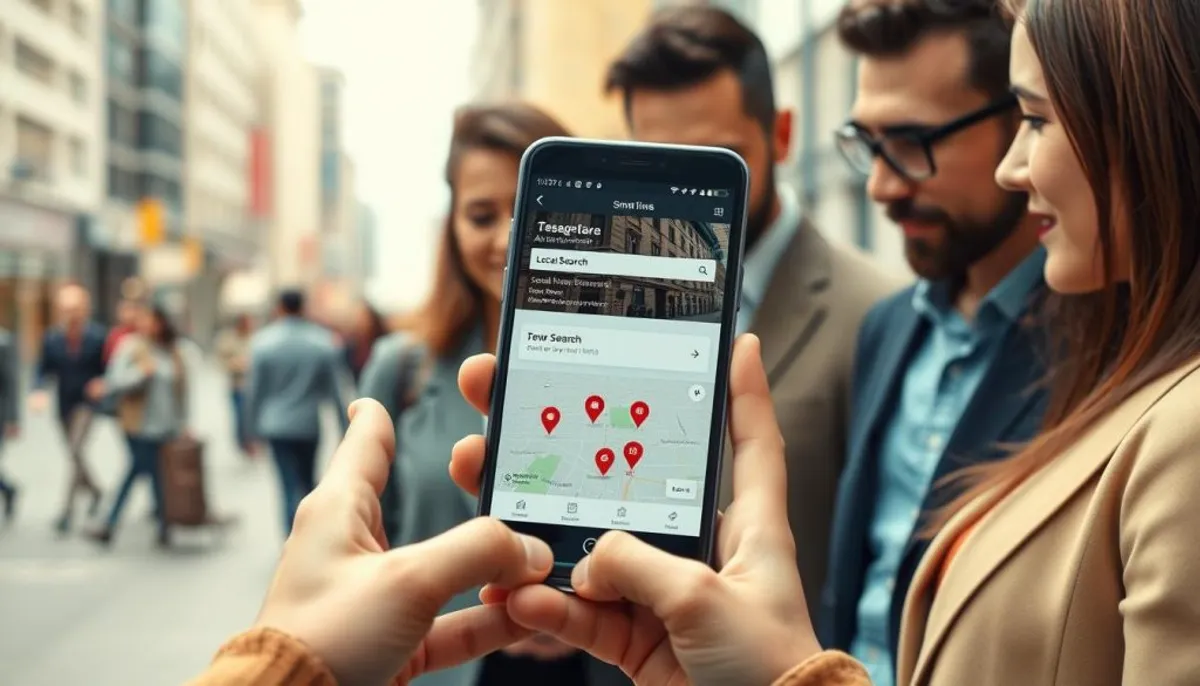
Employing schema markup enhances the clarity of business-related information for search engines and linguistic models, facilitating the provision of direct responses. Integration of structured data types such as LocalBusiness and Service, coupled with Rich Results Test verification, diminishes uncertainties. Concise, direct-answer content structures, including bullet points, markedly improve data extraction by Language Learning Models.
Geotargeting accuracy is paramount in preserving local relevance. Creation of distinct XML sitemaps for diverse markets, careful management of canonical tags to distinguish nearly identical content, and appropriate application of hreflang tags for multilingual or multicountry content, ensure clarity. Such precision averts the dilution of local influence through inconsistent information across various directories and pages.
Server selection and content distribution optimization are imperative for ensuring minimal latency and uniform loading speeds for proximal users. For searches with high conversion potential, integrating Accelerated Mobile Pages (AMP) or adopting a mobile-first responsive design can be advantageous. Regular monitoring and correcting of crawling issues are essential for ensuring the visibility of local content in both maps and search results.
A succinct technical audit list encompasses: verification of structured data implementation, confirmation of canonical tags, dissemination of market-specific sitemaps, optimization of visual and script elements for mobile interfaces, and continuous monitoring of website speed. Implementing these consistent, minor adjustments enhances online visibility and refines the presentation of your business to geographically oriented technologies.
Conclusion
Initiate with foundational SEO: robust on-page elements, rapid page speeds, and a straightforward site architecture. Incorporate SEO geo strategies such as engaging copy tailored for conversation, effective schema markup, and content optimized for voice search and Language Learning Models (LLMs). Marry these with accurate geo-targeting and unwavering location details. This approach ensures your business stands out in traditional searches and AI-curated discoveries.
The relevance of local SEO persists for entities catering to proximal clientele. It’s imperative to maintain an up-to-date Google Business Profile, oversee citations and reviews vigilantly, and cultivate genuine local backlinks. Employ analytical tools like Semrush, BrightLocal, Moz Local, and Ahrefs for performance evaluation and recognizing potential enhancements, steering clear of unreliable tactics such as square-based geo grids.
Ascertain true user desires, refine content for city and neighborhood specificity, and prioritize seamless mobile experiences. For teams requiring scalability, platforms like UnlimitedVisitors.io offer rapid creation of GEO-specific, localized content, whilst allowing direct oversight of GBP, citations, and online reputation. This holistic strategy—integrating SEO visibility, geo-clarity, and local search pertinence—yields a steadfast and omnipresent brand representation.